The Basics Of Aquaculture

Building Green Economies with Integrated Farming
January 11, 2025The Basics of Aquaponics
Aquaponics is a sustainable and innovative method of farming that combines aquaculture (the cultivation of aquatic animals, typically fish) with hydroponics (the cultivation of plants in a soilless environment). In aquaponics, a closed-loop system is created in which fish and plants coexist, benefiting each other and forming a self-sustaining ecosystem.
Here’s how aquaponics works:
- Fish Tanks: Fish are raised in tanks or containers. These fish produce waste, primarily in the form of ammonia.
- Biological Filtration: Beneficial bacteria in the system convert the ammonia from the fish waste into nitrates, a form of nitrogen that is a valuable nutrient for plants.
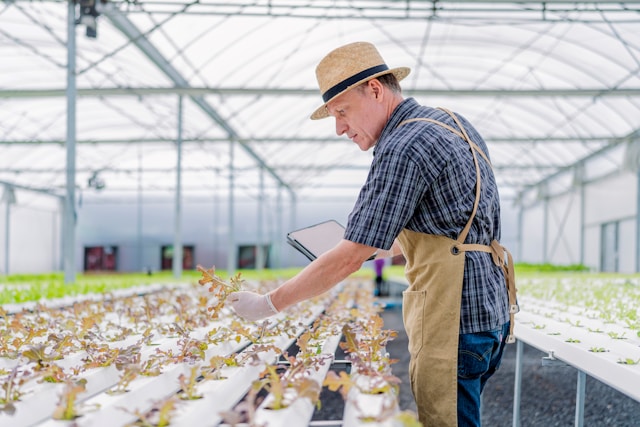
- Plant Beds: Above or adjacent to the fish tanks are plant beds where various types of plants, such as herbs, vegetables, or fruits, are grown. These plants are cultivated without soil, typically in a growing medium like gravel or clay pellets.
- Nutrient Circulation: Water from the fish tanks is continually pumped into the plant beds. The plant roots take up the nitrates and other nutrients present in the water, effectively “cleaning” it and removing toxins that could be harmful to the fish.
- Clean Water Returns to the Fish: After the plants have filtered the water and absorbed the nutrients, the now clean and nutrient-rich water is returned to the fish tanks. This closed-loop system continuously recirculates and purifies the water, maintaining a healthy environment for both fish and plants.
In this symbiotic relationship, the fish provide the necessary nutrients for plant growth through their waste, while the plants help filter the water and maintain water quality for the fish. It’s a highly efficient and sustainable way of producing both fresh, organic vegetables and fish protein without the need for chemical fertilizers, pesticides, or large amounts of water. When it comes to sustainable agriculture methods, aquaponics is particularly well-suited for urban and small-scale farming, offering a resource-efficient and environmentally friendly approach to agriculture.
Sustainable Agriculture Methods: Why Aquaponics is a Vital Part of a Sustainable Future
Aquaponics is a pivotal building block in the path toward a sustainable future. Its significance lies in its capacity to address multiple critical challenges simultaneously. It is an emblem of resource efficiency, ecological harmony, and education in sustainable practices, making it an essential tool in building a greener, more resilient, and ecologically conscious world through:
- Resource Efficiency: Aquaponics is highly resource-efficient. It recirculates water, using up to 90% less water than traditional soil-based farming. This is crucial in a world where water scarcity is a growing concern.
- Minimized Environmental Impact: By eliminating the need for soil, aquaponics reduces soil erosion, pesticide use, and the risk of nutrient runoff, which can contaminate water bodies. It’s a more environmentally friendly way of producing food.
- Chemical-Free Farming: Aquaponics relies on the natural synergy between fish and plants. Fish waste serves as a nutrient source for plants, reducing or eliminating the need for synthetic fertilizers and chemical pesticides.
- Year-Round Production: Controlled environments in aquaponics allow for year-round cultivation, providing a consistent supply of fresh produce regardless of seasonal limitations. This can reduce the reliance on imported or out-of-season produce.
- Reduced Food Miles: Local aquaponic farms can help reduce the distance food travels from farm to table, cutting down on transportation emissions and contributing to a more sustainable, local food system.
- Space Efficiency: Aquaponics systems can be designed to fit into small spaces, including urban areas, making it feasible to produce food in locations with limited available land.
- Energy Efficiency: These systems can be powered by renewable energy sources, reducing their carbon footprint.
- Economic Viability: Aquaponics can be a profitable venture, particularly for small-scale and local producers, contributing to sustainable economic development.
- Biodiversity and Ecosystem Health: Aquaponic systems can support a variety of plant and fish species, enhancing biodiversity and promoting ecosystem health within the closed-loop environment.
- Educational and Research Value: Aquaponics serves as a valuable educational tool for teaching about ecology, biology, and sustainable agriculture. It also provides opportunities for research into food production methods that are environmentally and economically sustainable.
- Adaptability: Aquaponic systems can be tailored to specific environments and crop choices, making them adaptable to various climates, crops, and local needs.
- Community and Food Security: Aquaponic farms can contribute to local food security, reducing the community’s reliance on external sources and enhancing resilience in the face of food supply disruptions.
Overall, aquaponics is vital for its potential to address pressing challenges such as water scarcity, soil degradation, and the environmental impacts of traditional agriculture. Its sustainability, efficiency, and versatility make it an important method in the quest for a more sustainable and secure global food supply.